This one is about the light.
Next Wednesday, our SG61 Photowalk takes us from HarbourFront MRT into Sentosa, starting at 6pm.
That timing gives us something special.
We’ll begin in daylight, move through sunset, catch blue hour, and finish with the lights of Sentosa around us.
For this walk, I’d like us to focus on two simple techniques.
Silhouettes and backlighting.
Blue hour and artificial light.
Both are about learning to see what happens when the light changes.
1. Silhouettes and backlighting
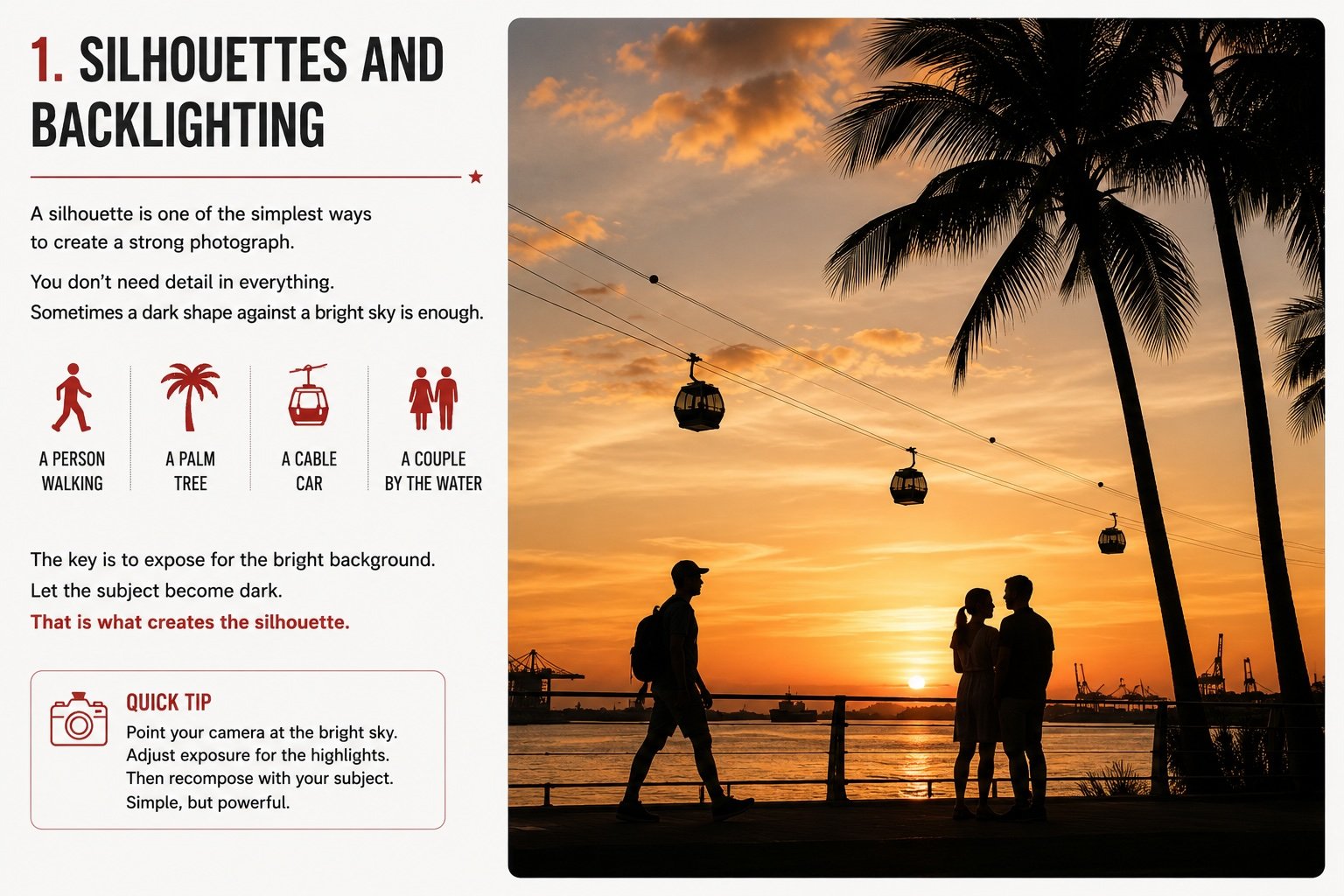
A silhouette is one of the simplest ways to create a strong photograph.
You don’t need detail in everything.
Sometimes a dark shape against a bright sky is enough.
A person walking.
A palm tree.
A cable car.
A couple standing near the water.
The key is to expose for the bright background.
Let the subject become dark.
That is what creates the silhouette.
Keep the shape simple
Silhouettes work best when the subject is easy to recognise.
If two people overlap, the shape can become messy.
If too many objects sit behind your subject, the frame can feel confused.
So keep it clean.
Move a little.
Wait for the person to step into open space.
Then shoot.
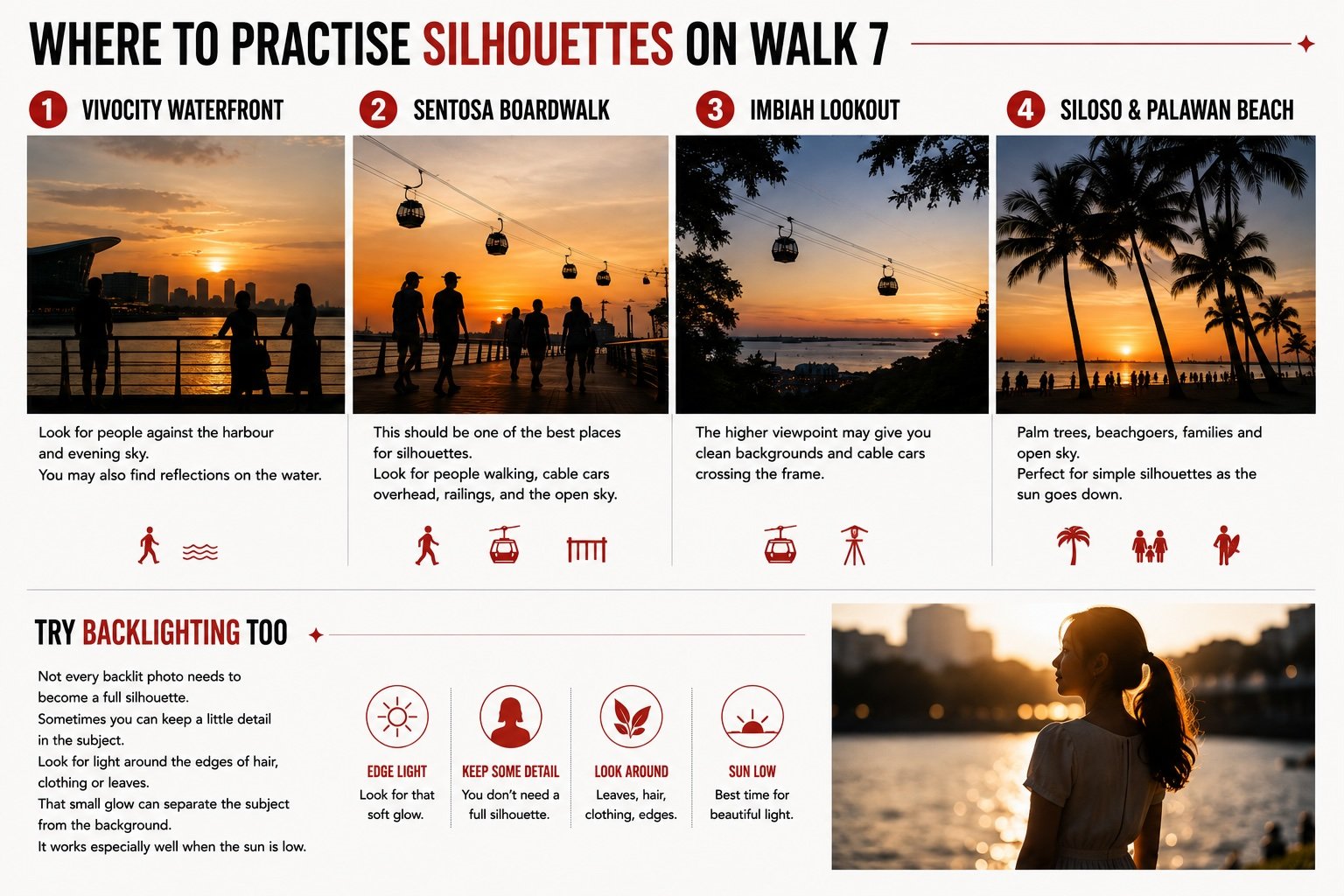
Where to practise silhouettes on Walk 7
VivoCity Waterfront
Look for people against the harbour and evening sky.
You may also find reflections on the water.
Sentosa Boardwalk
This should be one of the best places for silhouettes.
Look for people walking, cable cars overhead, railings, and the open sky.
Imbiah Lookout
The higher viewpoint may give you clean backgrounds and cable cars crossing the frame.
Siloso and Palawan Beach
Palm trees, beachgoers, families and open sky.
Perfect for simple silhouettes as the sun goes down.
Try backlighting too
Not every backlit photo needs to become a full silhouette.
Sometimes you can keep a little detail in the subject.
Look for light around the edges of hair, clothing or leaves.
That small glow can separate the subject from the background.
It works especially well when the sun is low.
2. Blue hour and artificial light
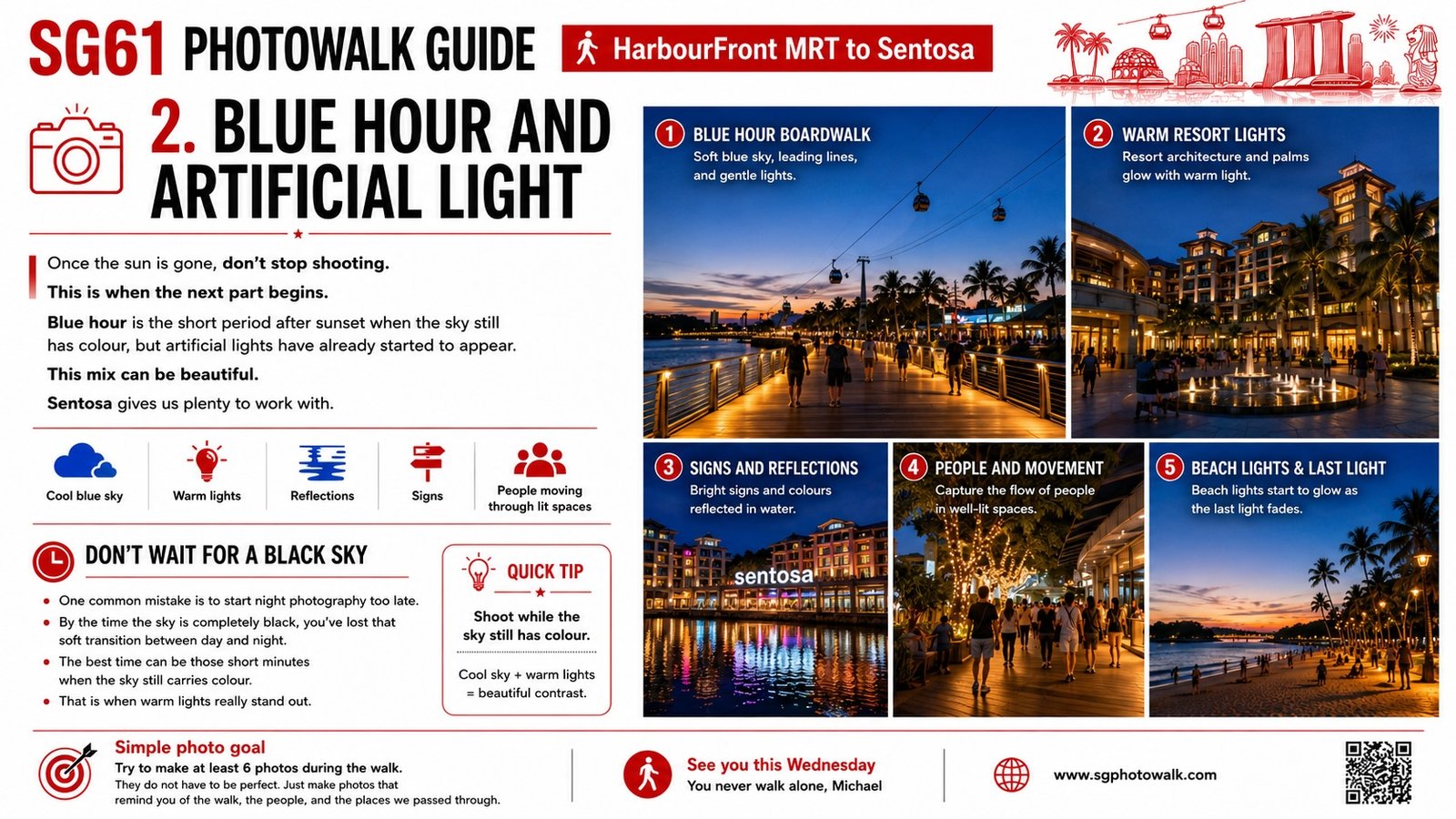
Once the sun is gone, don’t stop shooting.
This is when the next part begins.
Blue hour is the short period after sunset when the sky still has colour, but artificial lights have already started to appear.
This mix can be beautiful.
Cool blue sky.
Warm lights.
Reflections.
Signs.
People moving through lit spaces.
Sentosa gives us plenty to work with.
Don’t wait for a black sky
One common mistake is to start night photography too late.
By the time the sky is completely black, you’ve lost that soft transition between day and night.
The best time can be those short minutes when the sky still carries colour.
That is when warm lights really stand out.
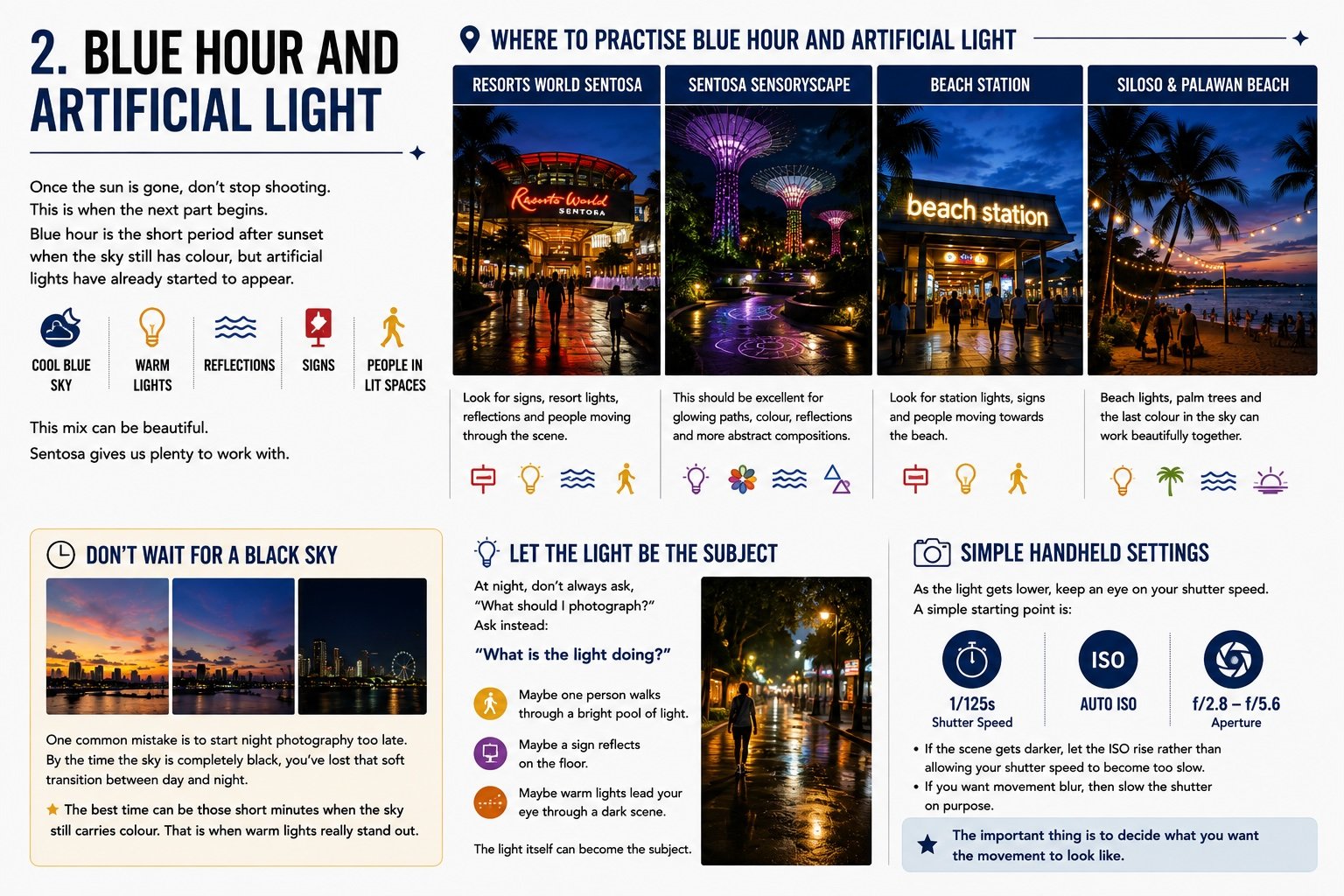
Where to practise blue hour and artificial light
Resorts World Sentosa
Look for signs, resort lights, reflections and people moving through the scene.
Sentosa Sensoryscape
This should be excellent for glowing paths, colour, reflections and more abstract compositions.
Beach Station
Look for station lights, signs and people moving towards the beach.
Siloso and Palawan Beach
Beach lights, palm trees and the last colour in the sky can work beautifully together.
Let the light be the subject
At night, don’t always ask, “What should I photograph?”
Ask instead:
What is the light doing?
Maybe one person walks through a bright pool of light.
Maybe a sign reflects on the floor.
Maybe warm lights lead your eye through a dark scene.
The light itself can become the subject.
Simple handheld settings
As the light gets lower, keep an eye on your shutter speed.
A simple starting point is:
-
Around 1/125s
-
Auto ISO
-
Aperture around f/2.8 to f/5.6
If the scene gets darker, let the ISO rise rather than allowing your shutter speed to become too slow.
If you want movement blur, then slow the shutter on purpose.
The important thing is to decide what you want the movement to look like.
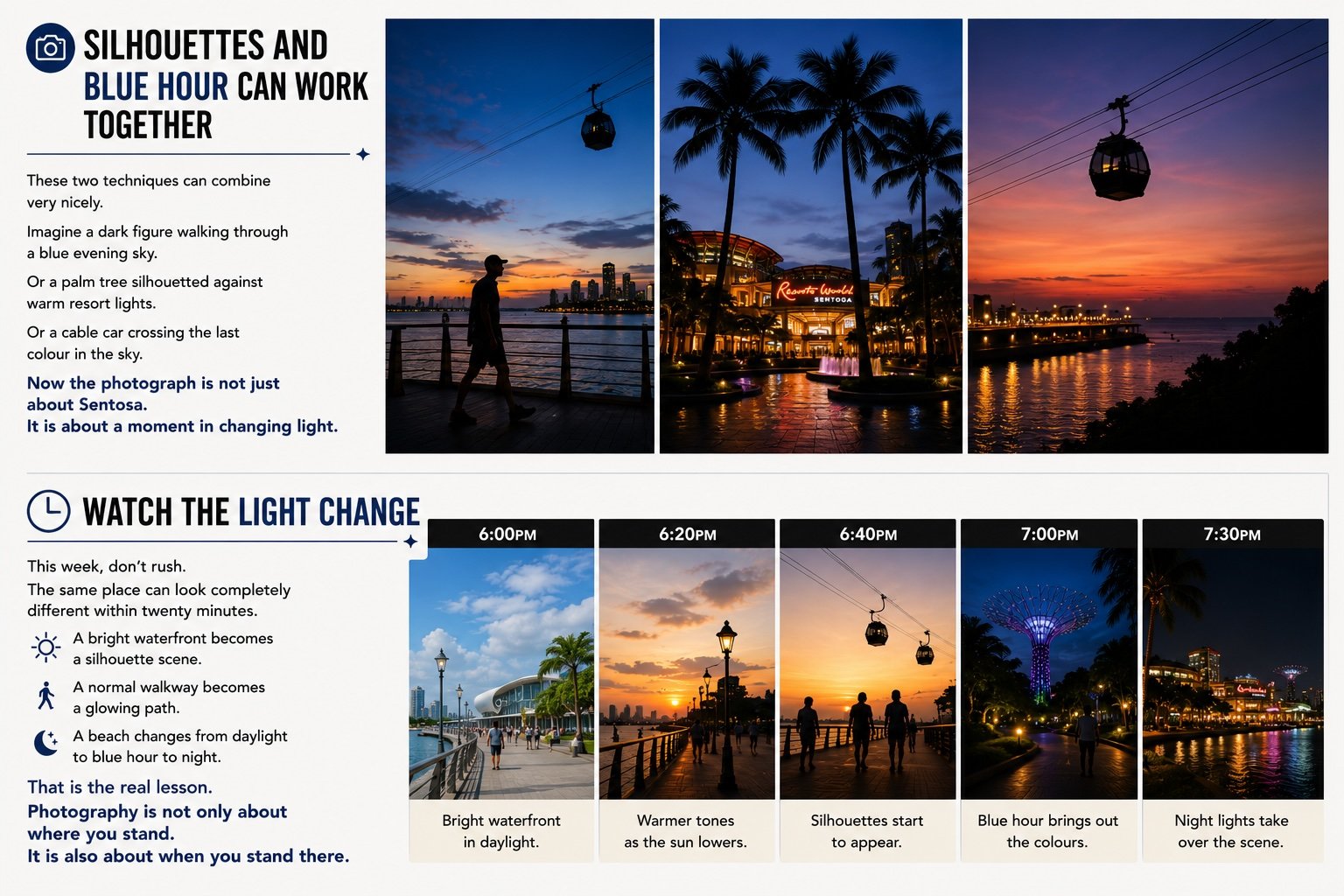
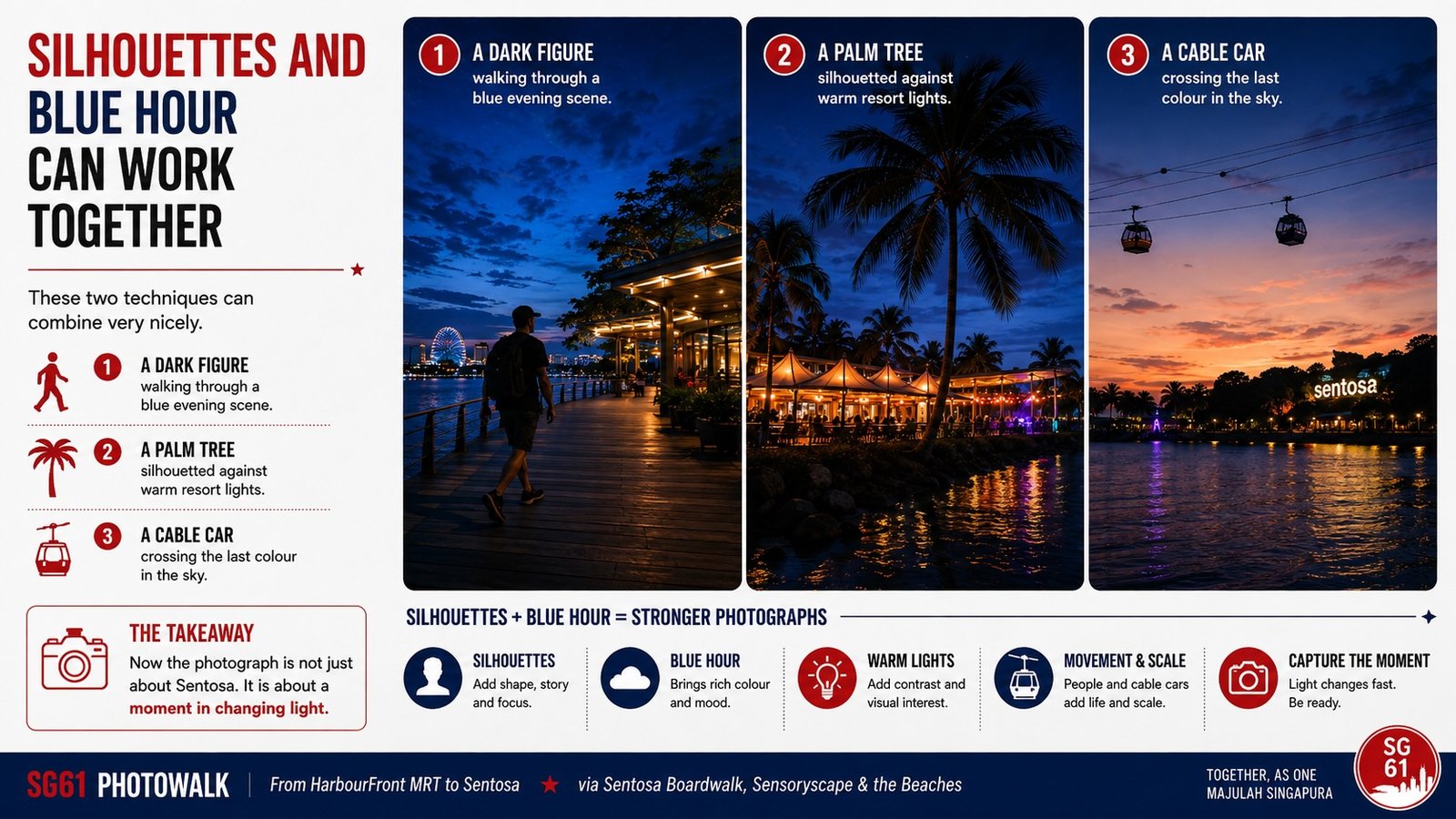
Silhouettes and blue hour can work together
These two techniques can combine very nicely.
Imagine a dark figure walking through a blue evening sky.
Or a palm tree silhouetted against warm resort lights.
Or a cable car crossing the last colour in the sky.
Now the photograph is not just about Sentosa.
It is about a moment in changing light.
This week’s SG61 challenge
For Walk 7, try to create:
-
3 photographs using silhouettes or backlighting
-
3 photographs where blue hour or artificial light is an important part of the image
For at least one silhouette photo, include a person.
For at least one blue hour photo, include both natural evening light and artificial light.
Then choose your favourite 6 images for our Thursday Zoom review.
Watch the light change
This week, don’t rush.
The same place can look completely different within twenty minutes.
A bright waterfront becomes a silhouette scene.
A normal walkway becomes a glowing path.
A beach changes from daylight to blue hour to night.
That is the real lesson.
Photography is not only about where you stand.
It is also about when you stand there.
See you at HarbourFront MRT.
Michael